Laraaji – Universe

Since I’ve alluded to him a couple times, the least I could do is devote a post to a New Age giant: Laraaji. Born Edward Larry Gordon in Philadelphia, PA, he was a student of violin, piano, trombone, and voice in his youth and originally pursued studies in music at Howard University. He moved to New York to become a stand-up comedian and it was while in the Big Apple that he began studying eastern Mysticism and the zither, which he found in a pawn shop. The term zither is derived from the Latin “cithara” (also the root word for guitar) is used to describe harp-like instruments consisting of many strings strung over a flat body with no neck, which separates it from more guitar-like string instruments. Though there are a few different varieties, it is unclear which type Laraaji found that fateful day in the pawn shop. Regardless, he took the instrument home and began experimenting with adding electronic amplification to the instrument. Legend has it that Brian Eno heard Laraaji busking in Washington Square Park and, recognizing a sonic comrade, insisted they work together. The result is the third installment of Eno’s Ambient series Ambient 3: Day of Radiance, which brought international attention to Laraaji’s unique instrument and sound. Thus began a long career of recording beautiful, contemplative music that continues to this day. Universe comes from a 1987 release on the great New Age label Audion Recordings.

In addition to his work as a musician, Laraaji began leading what he calls Laughter Meditation Workshops that tie together his stand-up roots with his music. In an interview over at Aquarium Drunkard he sums it up pretty nicely:

To laugh often is to keep the breath open and the energies of the body flowing. And then there’s communal laughter, the laughing of a community. Start with the family, the laughter of a family getting together for a meal or a holiday. There’s something about a giggling kind of joyous, smiling, lovableness that’s not necessarily fueled by jokes or humor, but just the joy of being in each other’s presence. Laughter is a sensation of communal bonding.
Yura Yura Teikoku – Nantonaku Yume O

Yura Yura Teikoku formed in the late-1980s in Tokyo and were very highly regarded in the Japanese underground music scene there, though there first performance outside Japan didn’t come until 2005. This track comes off their last commercial release, 2007’s Hollow Me. Though the group has had a number of drummers over the years, bassist Chiyo Kamekawa and singer/guitarist Shintaro Sakamoto anchored the group until they disbanded in 2010, citing a lack of enthusiasm. Both Kamekawa and Sakamoto have remained active with solo projects, and while I can’t say I’ve heard Kamekawa’s work I can vouch for Sakamoto’s two solo releases: How to Live with a Phantom and Let’s Dance Raw. What really hooks me about this group (and Sakamoto’s solo work) is the blend of folk rock and psychedelia, which is a combination many have attended but few have pulled off as well as these guys do. If you like this track just listen to the auto-generated playlist for this track. It has a couple tracks from Sakamoto’s solo albums as well as some live cuts and it’s had my foot a-tappin’ all day.

K. Leimer – Very Tired

K. Leimer (aka Kerry Leimer) has been releasing ambient/experimental music since the late-1970s, primarily on his own label Palace of Lights. Very Tired closes out his 1983 release Music for Land and Water and is a good demonstration of his deliberate method of constructing sonic landscapes, primarily with synthesizers and tape loops. Music for Land and Water was originally composed not for commercial release but as part of a performance and installation series. Though I couldn’t find an audio clip of it available to share, the setup for the lead track “Art and Science” consisted of four tape systems playing loops of different lengths, which sounds like a real treat. Yet another example of the pioneering work that can be found in your local New Age bargain bin. Leimer made extensive use of loops in both his solo work and as part of the group Savant which featured Marc Barreca and other ambient artists. You can purchase physical releases from Palace of Sound here though it doesn’t look like Music for Land and Water is available on the site.

Mark Lang – Strawberry Man

Minnesota native Mark Lang began playing music with his brother Peter in the late 1960s, and both began pursuing a life in music once the family moved to California. While Peter was able to record a number of albums, initially with John Fahey’s Takoma Records, Mark’s lone commercial release was Texas John Boscoe released by Symposium Records (early home of Leo Kottke) in 1976. This track appears on one of the comps in Numero Group’s Wayfaring Strangers series, Guitar Soli, which features a whole host of forgotten and unsung guitarists who released instrumental material in the American primitive vein of John Fahey and Leo Kottke. Mark Lang’s fingerpicking and slide guitar work is on display with Strawberry Man, but he played maracas, banjo, and mandolin on that record as well. Texas John Boscoe was well-received within its somewhat niche market, and Mark Lang signed a deal with Capitol records at the start of the 1980s. Unfortunately nothing came of the deal, but he sure left a gem of a record behind.

Hiroshi Yoshimura – Something Blue

Something Blue comes from Yoshimura’s 1986 release Soundscape 1:Surround. In addition to his commercial releases, Yoshimura was a prolific creator of soundscapes and installations for both the art museums and galleries and more utilitarian spaces like train stations. He was also at the forefront of computer music in general, forming a group called Anonyme in the early 70s which focused on exploring the blossoming intersection between computing and sound. Much of his material was self-released in Japan, which means tracking down physical copies may be a bit tough. There have been a number of contemporary artists featured on TOTD that share sonic ground with this (I’m thinking of Sabbatical and H. Takahashi). Finding these early pioneers of sound who paved the way for these current experimental/ambient artists sheds new light on an oft-maligned genre like new age, though a revival of interest in these artists by re-issue labels like Numero Group and Light in the Attic has done a lot to expose this stuff to a new audience like myself who were a few years from existing when this material was being released. Given the hefty price tag of some of the original physical editions on Discogs, I wouldn’t mind a re-issue of this release and his debut Music for Nine Post Cards from 1982.

Mind & Matter – Sunshine Lady

Mind & Matter coalesced around James Harris III, better known to fans of the Minneapolis Sound as Jimmy Jam, in the late 1970s. Though Jimmy Jam is perhaps best known as a producer, his work with Mind & Matter is a high point of the excellent Purple Snow: Forecasting the Minneapolis Sound compilation from Numero Group. In addition to appearing a few times on that release, Numero also put out a separate collection of just Mind & Matter material called 1514 Oliver Avenue (Basement) that is just begging for heavy rotation this summer and any future summers. Sunshine Lady was the b-side to I’m Under Your Spell, the only single Mind & Matter put out while active, which was also reissued by Numero Group. That should be good news for collectors since the original single is currently listing for around $650 on Discogs. You can watch the group perform at Uncle Sam’s, the precursor to First Avenue in Minneapolis, in this awesome video that the heroes at Numero Group found during their research for their compilation. As the title of their comp suggests, this material foreshadows a lot of the Minneapolis Sound that would gain popularity later in the 1980s, particularly the use of synths and other electronics in otherwise more traditional R&B forms. That video confirms what I’ve always a suspected as a Minneapolis-born music fan: Minneapolis will never be cooler than it was in the late-70s and early 80s. If you dig this track I’d encourage you purchase the entire comp over at Numero Group site because it is a treasure trove. I purchased the LP set during a recent sale and not only is the music great but the supplemental book that comes with it is full of archival pictures and other goodies that are more than worth the price.

Sylvan Grey – Rainpiece

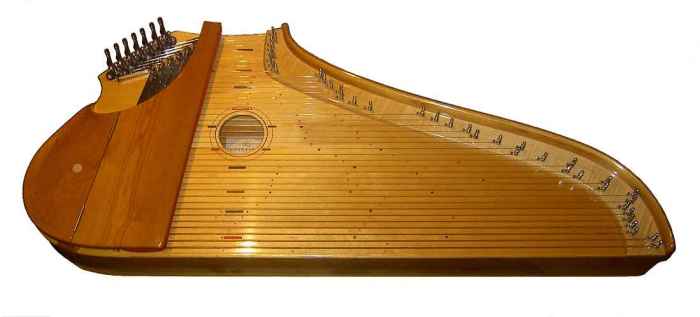
Rainpiece comes from the first of Sylvan Grey’s two releases, Ice Flowers Melting, from Fortuna Records in 1981. Grey discovered the kantele while travelling in England, though the instrument is actually of Finnish origin. She trained for a while with the Finnish master Ulla Katajavuori, who herself was an active player from the 1930s through the 1990s. Grey released one more album for Fortuna in 1989 called Recurring Dream that is perhaps more well-known in New Age circles, both featuring original music for the kantele. Fortuna Records is a sister label to Celestial Harmonies, which over the years has put out material by Terry Riley and Popol Vuh along with many other new age and non-Western artists. Since the kantele in many ways resembles the zither, it may sound familiar to anybody who has listened to the work of Laraaji, who was a prominent name in ambient/new age music, although his was electrified where Grey’s instrument has a more acoustic feel to it. If you enjoyed Rainpiece there’s a song from Recurring Dream entitled Rainshadow that feels very much like a companion to Rainpiece despite being recorded almost a decade later. There wasn’t much in the way of biography for Sylvan Grey, but I’m tempted to think that great ambient stuff like this can speak for itself.

kantele
Koistinen concert kantele with 38 stringsImage credit/more info: Wikipedia

Chris Stamey & the dBs – (I Thought You) Wanted to Know

This track comes off a single released in 1978. Chris Stamey and the dBs were one of the groups that sprouted out of the fertile musical soil of New York in the late 1970s, with groups like Television, The Feelies, and post-Big Star Alex Chilton coalescing around Ork Records. In addition to being released as a single, this track also appears on a Numero Group compilation focused on Ork Records output. It was penned by Televsion member Richard Lloyd, coming just after the release of Television’s best known album Marquee Moon. I was torn between choosing this song and a collaboration between Stamey and Alex Chilton called “The Summer Sun” which came out in 1977 as well. Chris Stamey has continued releasing solo work and working with the dBs from the late 1970s to the present, with his most recent release Euphoria coming in 2015 and a release under the name The dBs, Falling Off the Sky, coming just a few years earlier. Lloyd released an album of Jimi Hendrix covers a few years ago called The Jamie Neverts Story, which appears to be a reference to a mutual friend Lloyd shared with Hendrix early in Lloyd’s life, but as there is no citation on Wikipedia it doesn’t meet the strict standards and practices here at Orion’s Bastard. But you don’t have to figure that out to enjoy this power pop hidden gem, so try not to stress about it.

Nicklas Sørensen – Solo1

Nicklas Sørensen has been the guitarist for the Danish instrumental rock group Papir, but he’s just released a solo debut fittingly titled Solo that’s every bit as great as his work with Papir. That might be because his bandmates Christoffer Brøchmann Christensen and Christian Becher Clausen join him on his solo record, but whatever name they decide to release material under is fine by me as long as it keeps coming. While there is a lot of overlap, this release has a pronounced krautrock focus which really gives Sørensen the freedom to explore every conceivable sound he can muster from his Fender. It really reminds me a lot of Hallogallo with a little bit of the Inner Tube record put out by Mark McGuire of Emeralds and Spencer Clark. Both Papir and Sorenson’s Solo are available for purchase on LP over at El Paraiso Records. In addition to his Papir bandmates, Jonas Munk joined Sørensen for these sessions, who is a member of Causa Sui and one of the head honchos at El Paraiso. As if the guarantee of health care and overall high quality of life weren’t enough to make you yearn for Scandanavia, blissed-out psych rock is making an exodus from these United States even more appealing.

Isao Tomita – Bolero

Though his passing will not trigger remembrances of the kind we saw with Prince or Bowie, the electronic music world lost a titan in Isao Tomita when he passed last Thursday (May 5th) at the age of 84. He was a pioneer working in the early days of synthesizers along with Robert Moog and Wendy Carlos and released 37 studio albums over a career spanning from the late 1960s all the way up to 2016. Many of his releases comprised original arrangements of classical pieces in the vein of Wendy Carlos’ Switched-On Bach, though many of his arrangements often focused on 20th century music. He produced arrangements of other Ravel pieces, Grofe’s Grand Canyon Suite, Holst’s The Planets, and Stravinsky’s Firebird. Perhaps his best known release is a set of Debussy songs he recorded called Snowflakes Are Dancing. I was torn between choosing Bolero or his opening of the Grand Canyon suite (linked above) but all of his arrangements demonstrate just what a master he was of the modular synthesizer even in the instrument’s infancy.

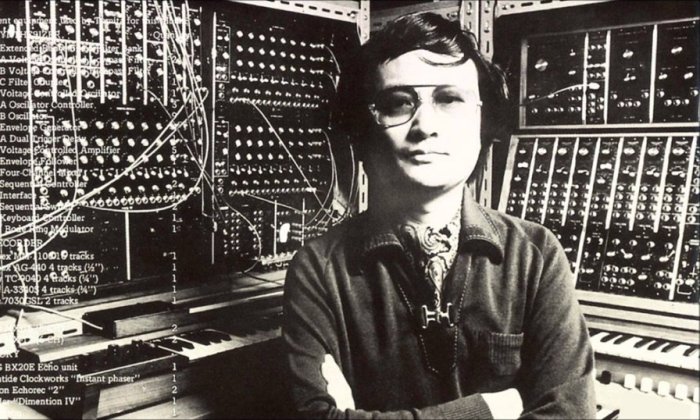
If you have a chance to scoop up one of his albums I’d recommend it, and for the most part they have been relatively cheap where I have found them, typically new age or miscellaneous bins. They provide a pretty fascinating glimpse into the early days of commercially released electronic music because he would often list which instruments/tools he used on what tracks. Here’s an example of one such listing:

isao-tomita
Notice the listing of filters, tape recorders, and other gadgets to his right. Image Credit: Tiny Mix Tapes

In addition to his studio work, his live shows often featured stunning theatrics, like the performance of Strauss’ Also sprach Zarathustra which he mixed from a suspended glass pyramid. He was a giant in the world of electronic music both in his native Japan and around the world, and he expanded the vocabulary of the modular synth immensely over the course of his lifetime. Though he may not be as well known as some of the other luminaries lost this year, his contributions to the music of the last century are something to behold. RIP.